Continuous power beneath the moving assembly line
Skillet conveyors rely on continuous onboard power for lifting, positioning and other critical functions. Contactless power removes sliding electrical contacts from the line, reducing maintenance beneath the moving platforms and supporting higher availability throughout final assembly.

A skillet is more than a transport platform
In automotive and heavy assembly, skillet platforms move with the product while supporting lifting, positioning and other powered functions. Conventional conductor rails and collectors add wear and recurring maintenance beneath the platform, where access is difficult and downtime is costly. Contactless power keeps the moving workstation powered without adding another wear point to the line.

Remove the weak point from moving power
PWRMOVE provides continuous contactless power along the skillet route without collectors, brushes or charging stops. By removing the mechanical power interface, OEMs gain more freedom in conveyor design while operators benefit from a simpler, more robust power architecture.
Keep every workstation productive
Lifting, positioning, controls and other onboard functions stay powered as the skillet moves through the line. Continuous inductive power keeps the workstation active without charging stops or sliding electrical contacts.
No wear. No maintenance. Highest speeds.
At higher speeds, conventional collectors create friction and wear. PWRMOVE transfers energy without physical contact, making the power transfer virtually maintenance-free and removing the collector as a limitation on movement.
Remove maintenance from the hardest place to reach
Brushes, collector shoes and conductor rails require inspection, adjustment and replacement beneath the moving platforms. Contactless power removes those wear parts from the transfer interface.
Built for real-world tolerances
Heavy platforms move, lift and transfer under load. Because energy crosses an air gap, the system does not depend on continuous mechanical contact and can be engineered around the tolerances of the conveyor.
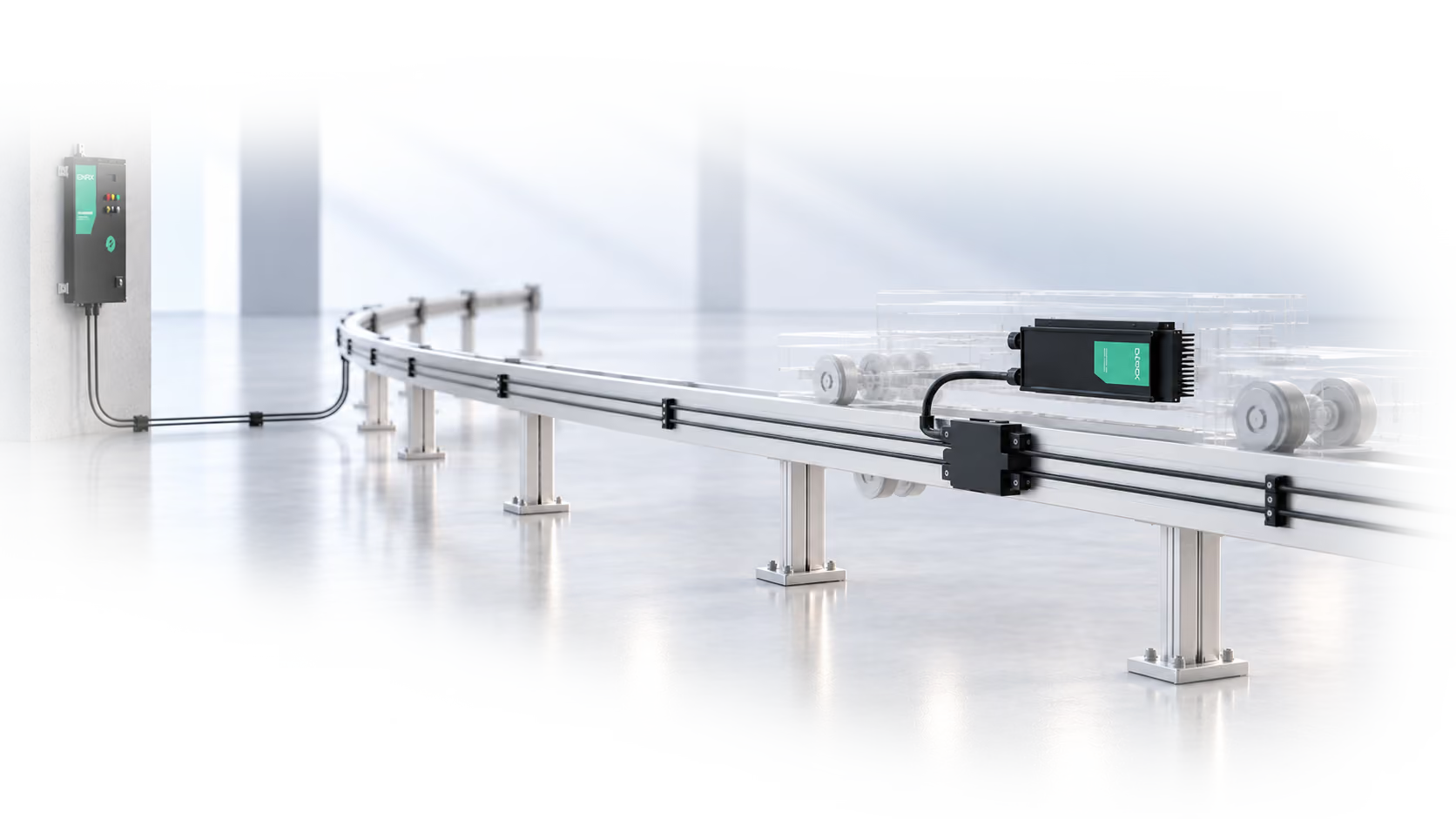
Continuous power along the skillet route
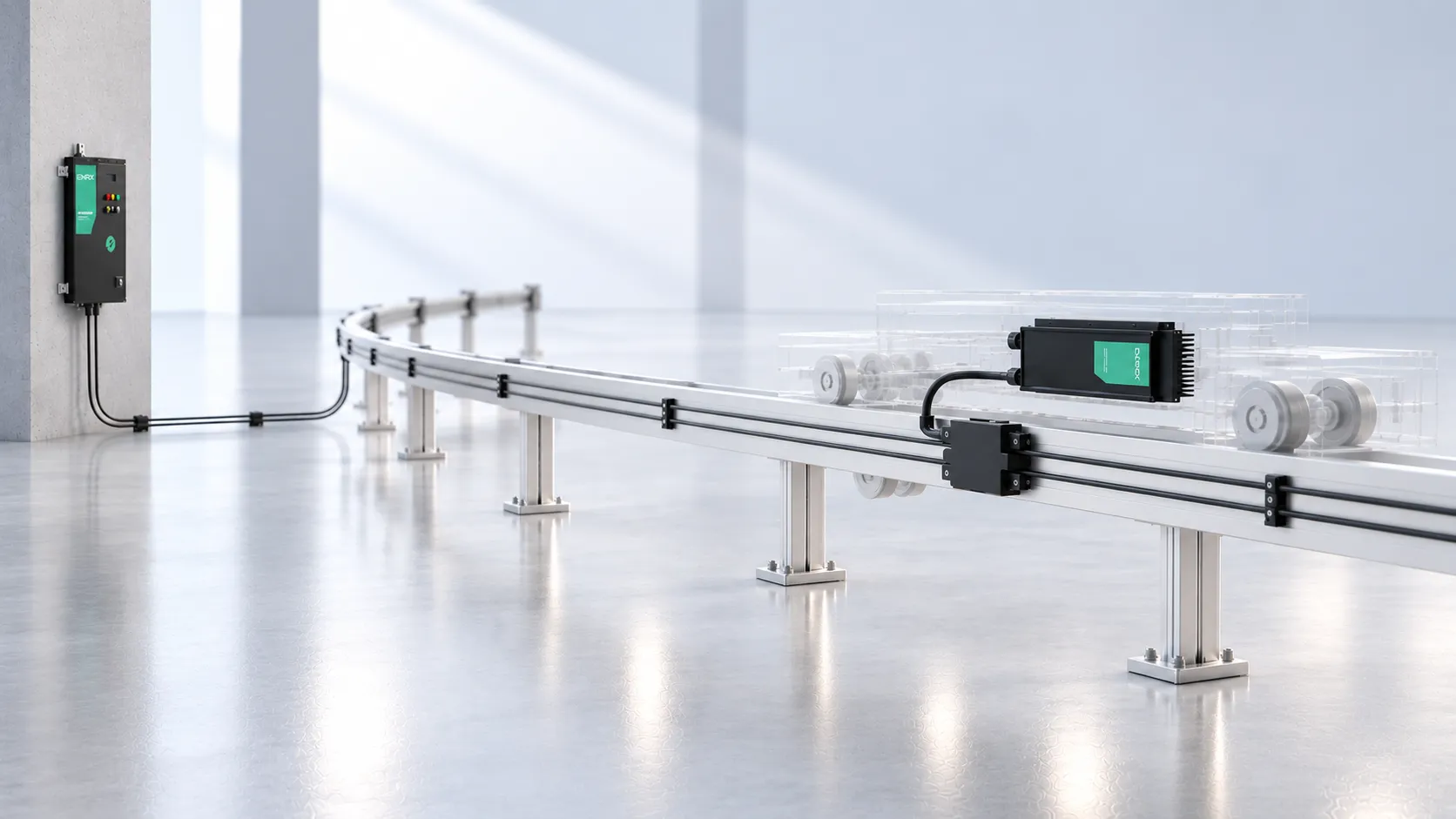
A stationary inductive track transfers energy to a pickup mounted on the moving skillet. An onboard rectifier converts it into the required DC supply for lift systems, actuators, sensors, controls and other electrical functions while the platform moves between assembly stations. The system is engineered around the track geometry, required air gap, onboard load and available installation space.
The power platform behind moving assembly
PWRMOVE delivers continuous contactless power to moving industrial equipment, making it a natural fit for skillet conveyors where uptime, low maintenance and reliable onboard power are critical.
At work every day. For decades
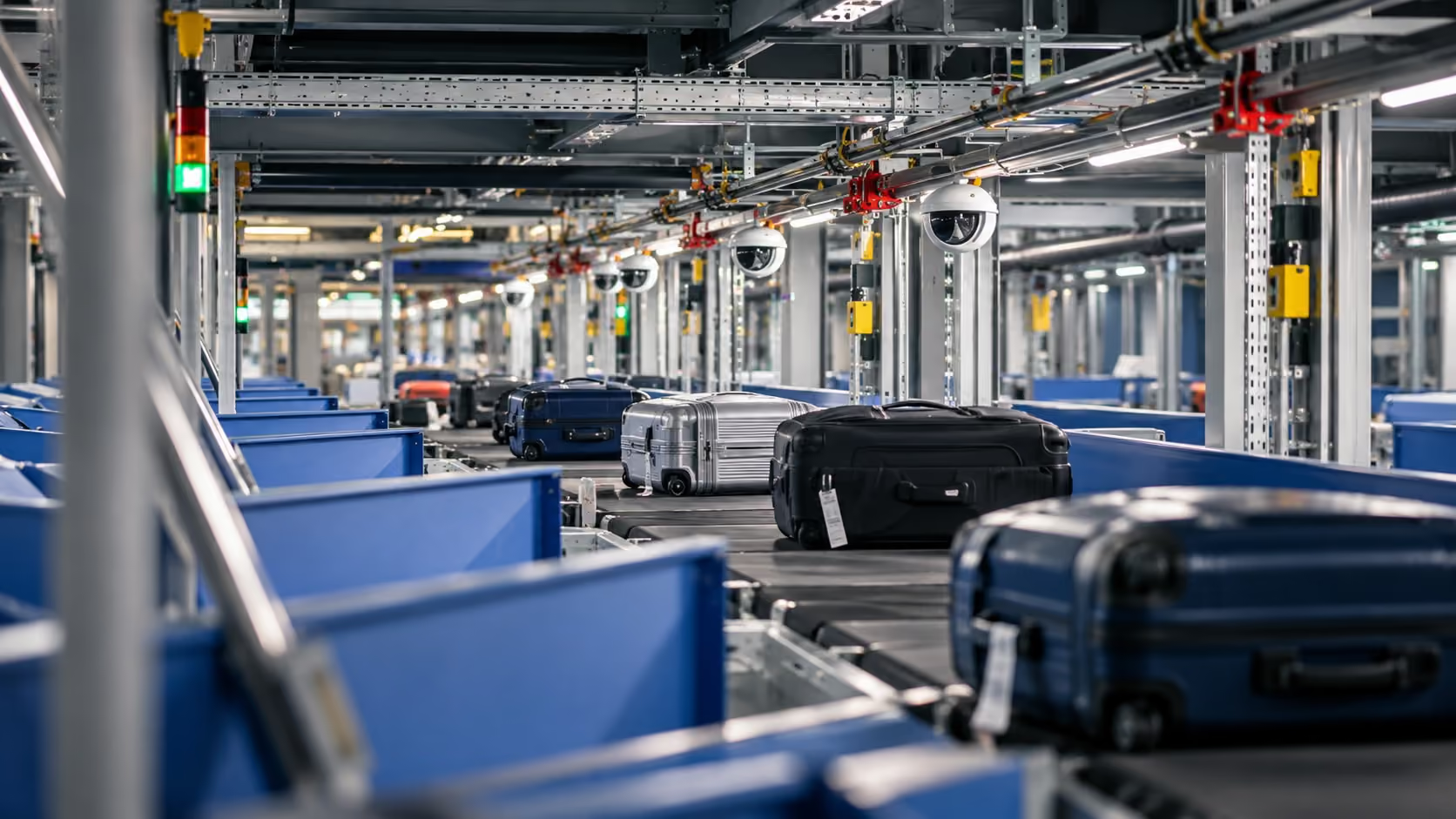
Contactless power for airport baggage sorters
baggage sorting
powered sorter track
sorter carriers

88 skillet platforms powered at Hyundai
skillet platforms
per platform
assembly tracks

25+ years of contactless power for parcel sorters
sorter experience
DHL sorter track
powered units
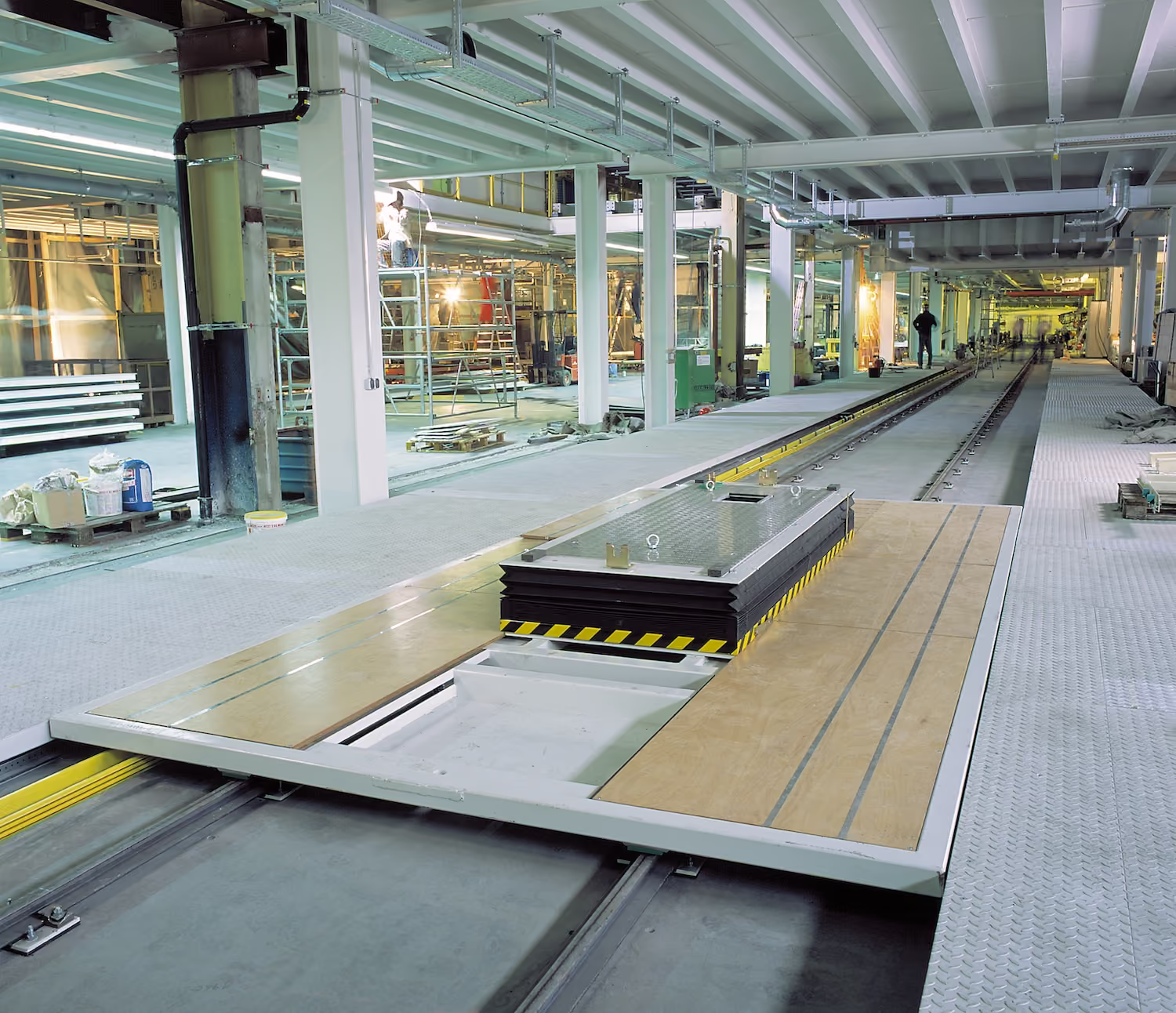
Contactless power for automotive skillet conveyors
powered track
skillet lines
platforms at one site
Get in touch with our product experts
And check if your integration fits and ask for all you need to know.


Evandro Nishimuni

What assembly and system engineers ask us
Can’t find what you’re looking for?
Why use PWRMOVE instead of a conductor rail?
Both can provide continuous power, but PWRMOVE removes the sliding electrical contact between the moving platform and the track. This eliminates collector wear, contact arcing and routine maintenance at the transfer interface.
What can PWRMOVE power on a skillet?
Typical onboard loads include lifting and positioning systems, actuators, sensors, controls and, depending on the conveyor design, onboard drive functions.
Can power remain available while the skillet is moving?
Yes. PWRMOVE transfers energy continuously along the equipped sections of the route while the platform moves between assembly stations.
What happens when multiple skillets need power at the same time?
The system is sized for the combined power demand within each powered section. The number of platforms, onboard loads, operating sequence and conveyor layout are considered together so power remains available where the production process needs it.
How does PWRMOVE handle mechanical tolerances?
Power transfers across an air gap rather than through physical contact. The pickup position, air gap and movement tolerances are engineered around the conveyor design.
Can PWRMOVE be integrated into an OEM skillet system?
Yes. ENRX IPT engineers the contactless power layer around the OEM’s conveyor architecture, including track geometry, pickup position, available space and onboard power demand.
Can an existing conductor rail be replaced?
Potentially. Retrofit feasibility depends on the existing track geometry, available installation space, platform design and electrical requirements.
What determines the PWRMOVE system design?
Track length, platform power demand, number of simultaneously powered skillets, air gap, speed and mechanical tolerances are considered together. ENRX IPT engineers the power supply, track, pickups and onboard conversion around the actual conveyor architecture.