Keeping monorails moving, without contact
Electrified monorail systems move components, subassemblies and vehicle bodies through production. PWRMOVE provides continuous contactless power or opportunity charging for suitable battery-equipped systems, reducing wear and supporting high availability in demanding environments.

When the carrier keeps moving, production keeps moving
EMS systems are built around independent movement, flexible routing and reliable material flow while keeping valuable floor space clear. PWRMOVE supports that performance with continuous inductive power to the moving carrier, removing the sliding electrical contact and the wear that comes with it.

Keep the power transfer out of the maintenance loop
EMS carriers accelerate, stop and travel long routes throughout production. PWRMOVE supplies them without a collector rubbing along a conductor rail, removing a recurring wear interface from every powered movement.
Continuous power for every moving carrier
Continuous inductive power keeps the carrier drive, controls and other onboard functions supplied while the vehicle moves through production, without a sliding electrical contact interrupting the flow.
No brush wear or carbon dust in paint shops
Contactless power eliminates brushes and collector shoes at the power-transfer interface. That means no brush wear or associated particles from the power supply. Particularly valuable in automotive paint shops and other production areas where cleanliness and high availability matter.
Less maintenance on hard-to-reach overhead carriers
EMS equipment often runs overhead, where inspection, replacement and repair work are time-consuming and can interfere with production. Removing brushes and collector shoes eliminates one recurring service point from every moving carrier.
Higher availability in continuous automotive production
Automotive production depends on predictable material flow and limited downtime. Removing a mechanical wear interface from the power transfer helps reduce recurring maintenance and service interventions on lines designed to run continuously.
Continuous power, from track to carrier
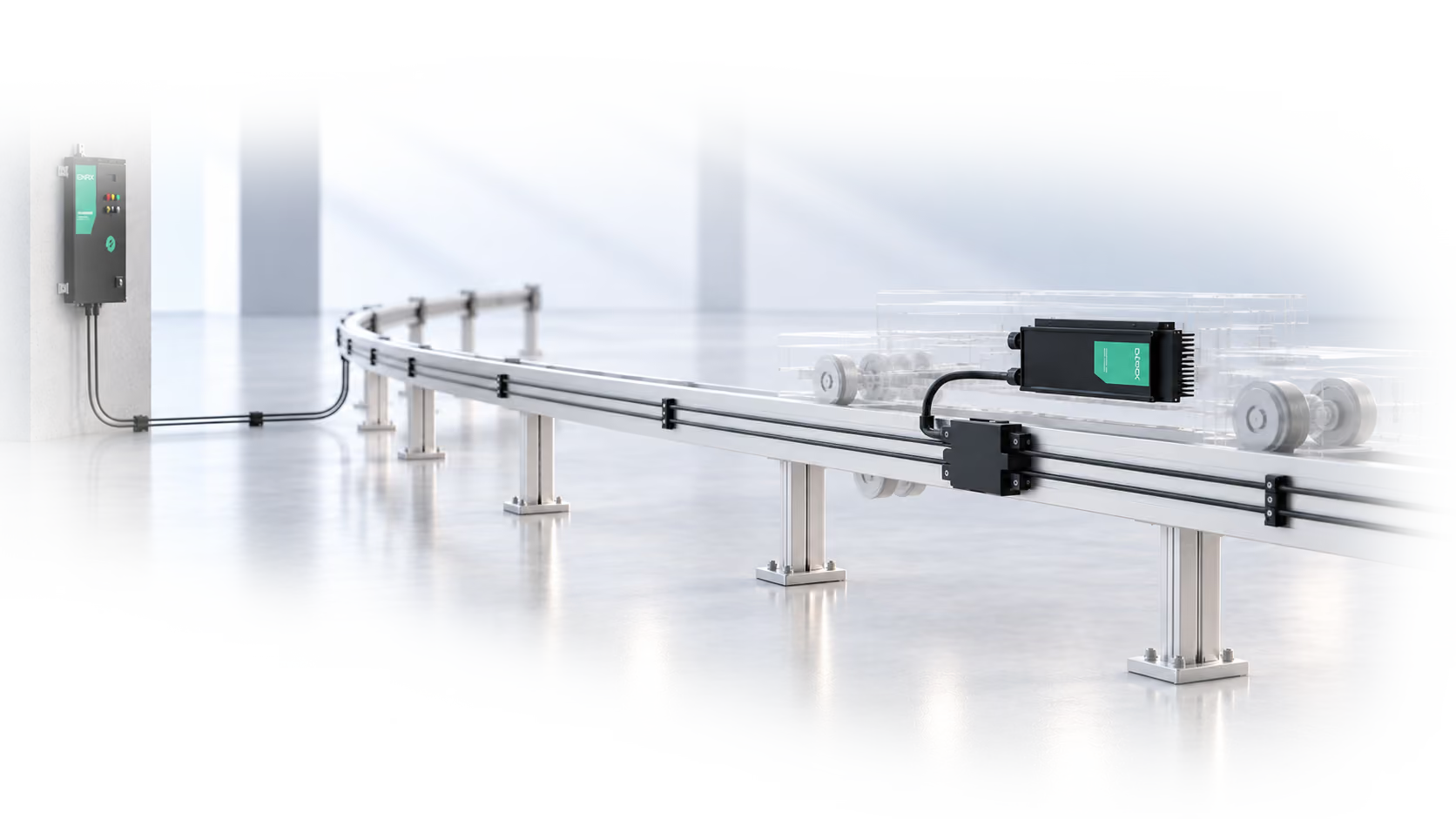
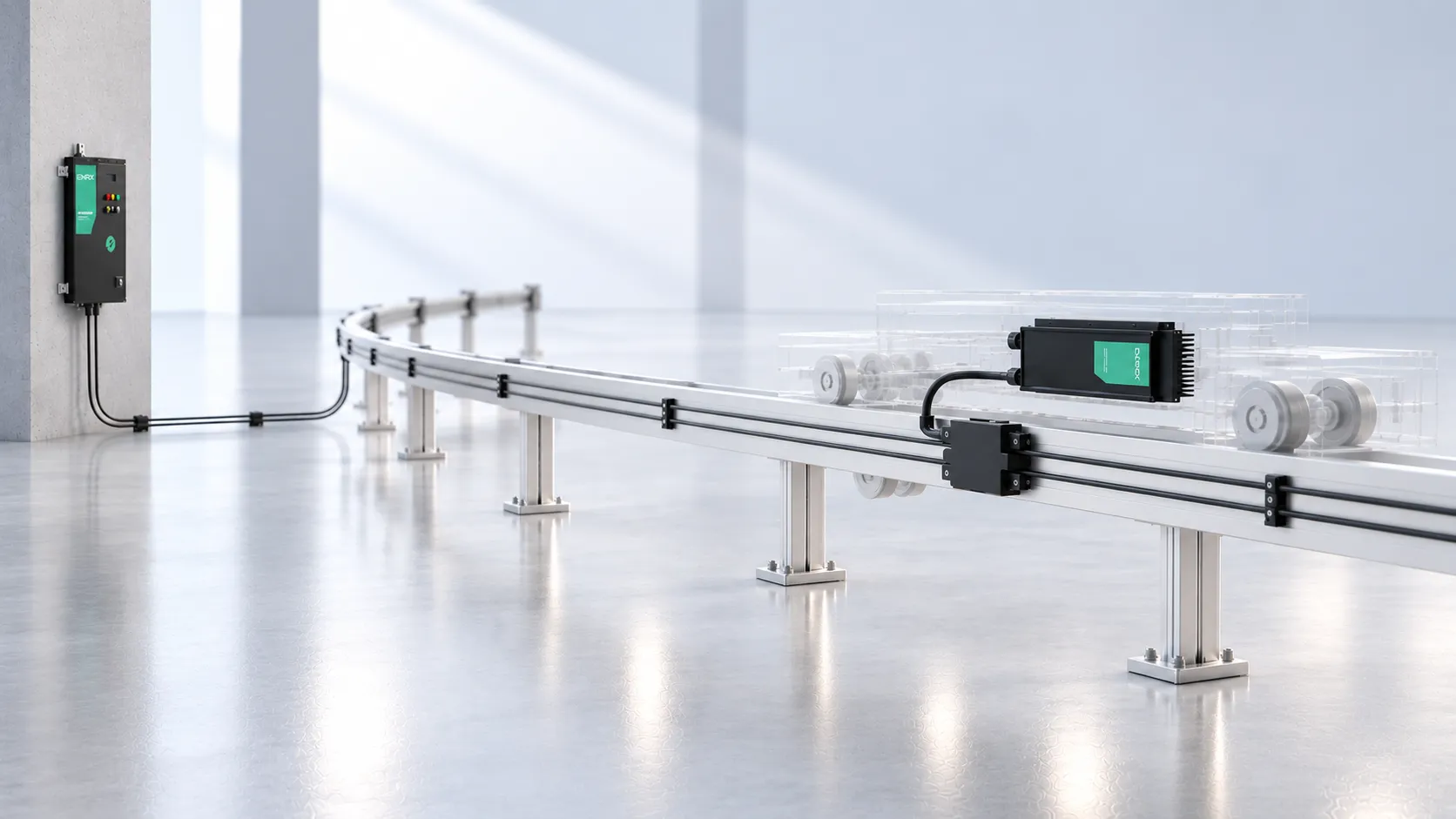
A stationary inductive track follows the EMS route while a pickup on the moving carrier receives energy across an air gap. The onboard rectifier converts it into the required supply for the drive, controls and other electrical functions. The system is engineered around carrier power demand, track geometry, operating speed and available installation space.

Designed around the carrier, not the other way around
ENRX IPT supplies the contactless power-transfer technology for integration into the EMS. Pickup position, track geometry, surrounding metal, onboard loads and available space are considered from the start, so PWRMOVE fits the carrier and route instead of defining them.
Sized around the real duty cycle
Carrier drive, acceleration and onboard functions create different continuous and peak loads. We size the contactless supply around the actual operating profile together with the EMS manufacturer or system integrator.
Engineered around the carrier geometry
Pickup position, mechanical clearance, surrounding metal and onboard electrical architecture all influence the design. Early involvement lets us integrate the power transfer into the carrier instead of adding it afterwards.
Power more than the drive
The pickup feeds the onboard electrical network, which can supply the traction drive together with controls, sensors, actuators and other carrier functions, depending on the EMS architecture and required power.
Proven in EMS since 2002
ENRX IPT technology has been used in electric monorail systems since 2002, with historical references across Europe, Asia, North America and Australia. That experience gives us a practical basis for new EMS designs today.
The contactless power platform for EMS
PWRMOVE supplies continuous inductive power to moving monorail carriers without brushes, collector shoes or sliding electrical contacts. The system is integrated into the EMS together with the machine builder or system integrator.
At work every day. For decades
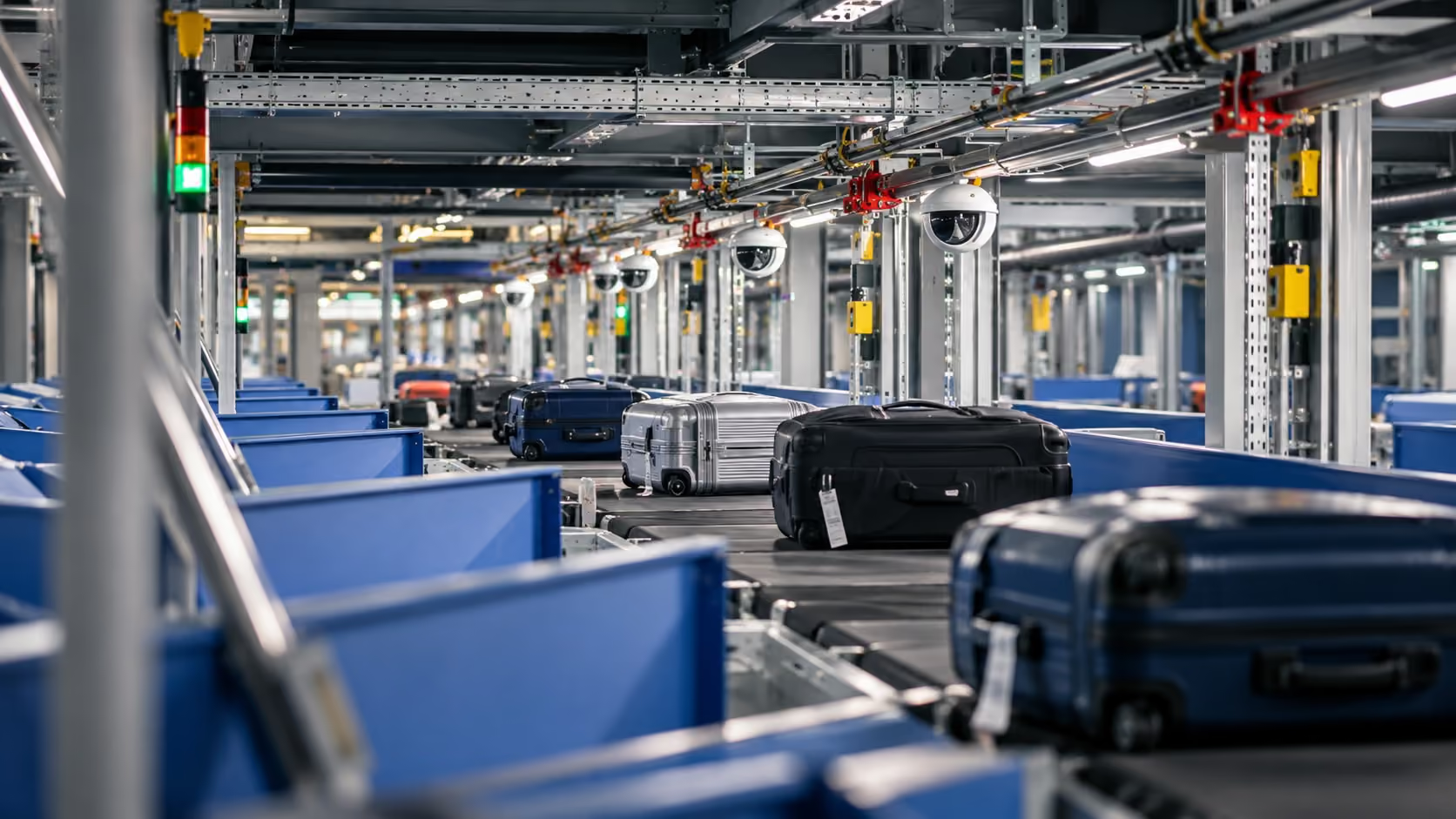
Contactless power for airport baggage sorters
baggage sorting
powered sorter track
sorter carriers

88 skillet platforms powered at Hyundai
skillet platforms
per platform
assembly tracks

25+ years of contactless power for parcel sorters
sorter experience
DHL sorter track
powered units

1,000+ EMS carriers powered without contact
EMS carriers
powered track
countries
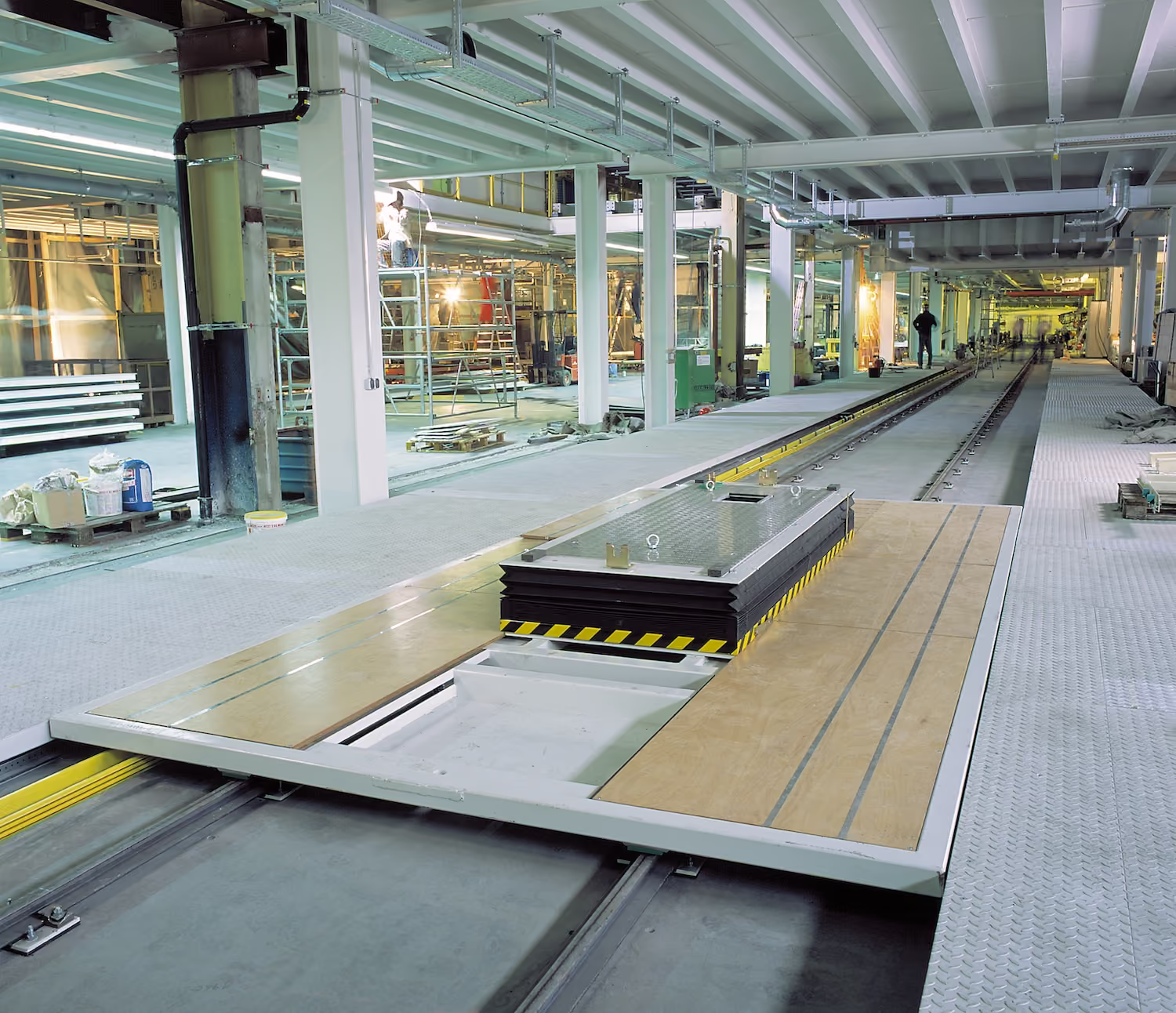
Contactless power for automotive skillet conveyors
powered track
skillet lines
platforms at one site

Contactless power for Mitsubishi’s painted body storage
powered EMS track
moving carriers
per carrier
Get in touch with our product experts
And check if your integration fits and ask for all you need to know.


Evandro Nishimuni

What EMS manufacturers and system integrators ask us
Power supply has to fit the carrier, track layout, duty cycle and production environment. These are some of the questions we most often discuss with OEMs, integrators and operators.
Why use inductive power instead of conductor rails?
Conductor rails are an established solution for EMS and can work well. The difference is the moving collector: PWRMOVE transfers energy across an air gap, eliminating brushes and collector shoes from the power interface and reducing recurring mechanical wear.
How fast can an EMS carrier run with PWRMOVE?
PWRMOVE has no inherent speed limitation in the power-transfer interface because energy is transferred without sliding contact. The permissible operating speed is determined by the mechanical EMS design, guidance and overall system concept.
What can PWRMOVE power on the carrier?
The pickup feeds the onboard electrical network. Depending on the carrier architecture and available power, that can include the travel drive, controls, sensors, actuators, lifting functions and other electrical loads.
Can PWRMOVE handle acceleration and other peak loads?
Yes, provided the complete power architecture is sized accordingly. We evaluate continuous and peak demand together with the EMS manufacturer or system integrator and design the contactless supply around the real duty cycle.
Can one pickup supply the complete carrier?
Potentially. It depends on the carrier architecture and total power demand. The pickup supplies the onboard electrical network, so one pickup can serve several functions when the system is sized for the combined load.
Is PWRMOVE suitable for 24/7 production?
Continuous production is one of the strongest use cases for contactless power. Removing brushes and sliding contacts reduces routine service at the power-transfer interface, which is especially valuable when maintenance windows are limited.
Can PWRMOVE follow curves, inclines and switches?
The inductive track can be engineered around complex EMS layouts. Curves, inclines, switch zones, pickup guidance and installation clearances are considered during system design rather than treated as an afterthought.
Can PWRMOVE be integrated into an existing EMS?
Potentially. Retrofit feasibility depends on the existing rail profile, carrier geometry, available space, electrical architecture and track layout. We assess those interfaces together with the OEM, integrator or operator.
What about data and communication?
PWRMOVE handles the contactless power transfer. For wireless communication, we work with DETO Automation, whose DECT NR+ Smart Antenna enables transparent wireless PROFINET and PROFIsafe communication for moving industrial systems. This gives EMS manufacturers a coordinated approach to contactless power and reliable wireless data.
When should ENRX IPT become involved?
Ideally during the concept or early engineering phase. Carrier power demand, speed, route geometry, pickup position, surrounding metal and available installation space all influence the optimum design.