Contactless power for clean transport environments
Wafer carriers and reticle pods move between process tools, stockers and load ports. Guided vehicles need energy during travel; battery-powered AGVs and AMRs need charging that fits their tasks. ENRX provides both without sliding electrical contacts or exposed charging contacts.

A delayed transfer can leave the next tool waiting
Overhead carriers, AGVs and AMRs move material continuously between process tools, stockers and load ports. Every vehicle needs to be ready when the next transfer is required.
Sliding electrical contacts can create wear, particles and maintenance, while battery-powered vehicles may lose availability when separate charging stops take them out of the material flow. In a cleanroom, both uptime and contamination control matter.
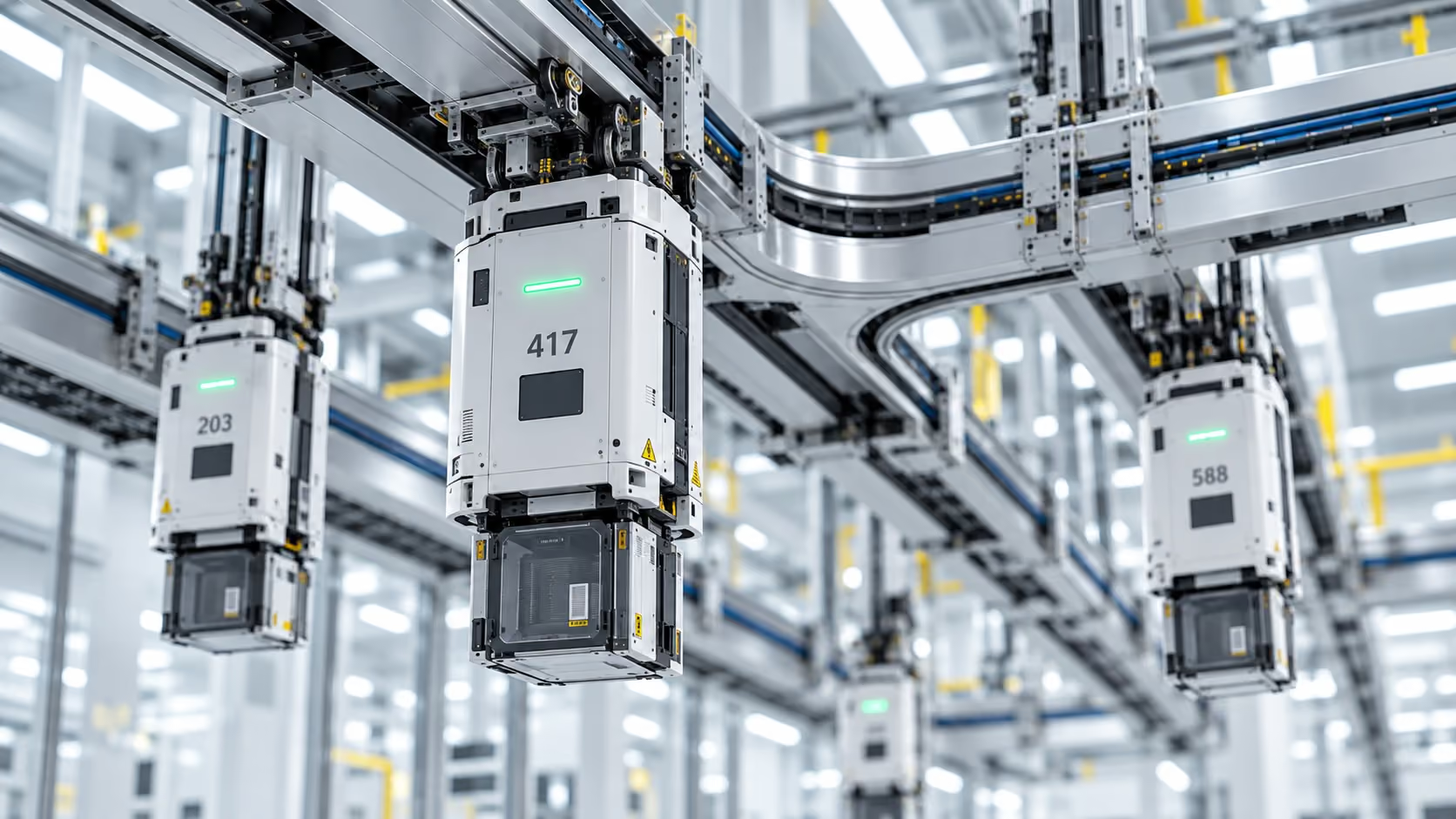
Continuous power for guided material transport
Overhead carriers and guided floor vehicles follow defined paths. PWRMOVE transfers energy across an air gap between a fixed power path and a pickup on the moving vehicle. The supply is designed around the route and the power needed for travel and onboard functions.
No dust from sliding contacts
Brushes and collector shoes wear as they move along a conductor. PWRMOVE removes that physical electrical contact, so the power transfer itself produces no collector dust and no contact arcing along the route.
This is particularly relevant where overhead transport operates above sensitive production areas.
Power while transport keeps moving
PWRMOVE supplies energy during normal vehicle movement. Carriers remain in the material flow instead of stopping or leaving the route for charging.
For systems with frequent transfers between tools and stockers, energy supply becomes part of normal operation.
Fewer maintenance interventions in the cleanroom
There are no brushes or collector shoes at the power-transfer interface to inspect, adjust or periodically replace.
This is especially valuable on overhead routes, where maintenance access can interrupt transport and requires work inside the controlled environment.
More freedom in route design
Power transfers across an air gap, giving OEMs more freedom to integrate the energy supply into overhead rails or guided floor systems.
The latest PWRMOVE generation also reduces system size significantly, making contactless power easier to integrate where installation space is limited.
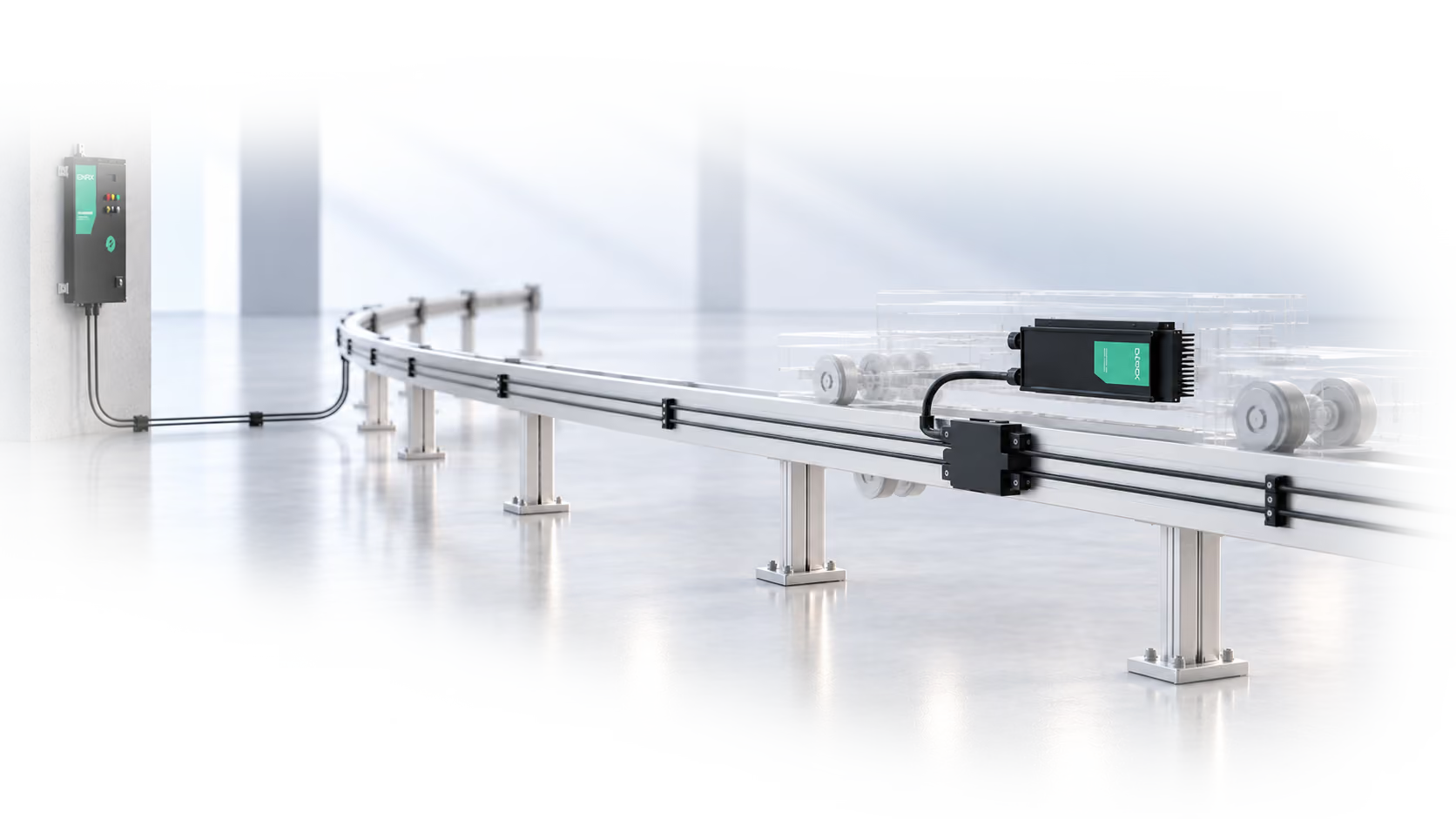
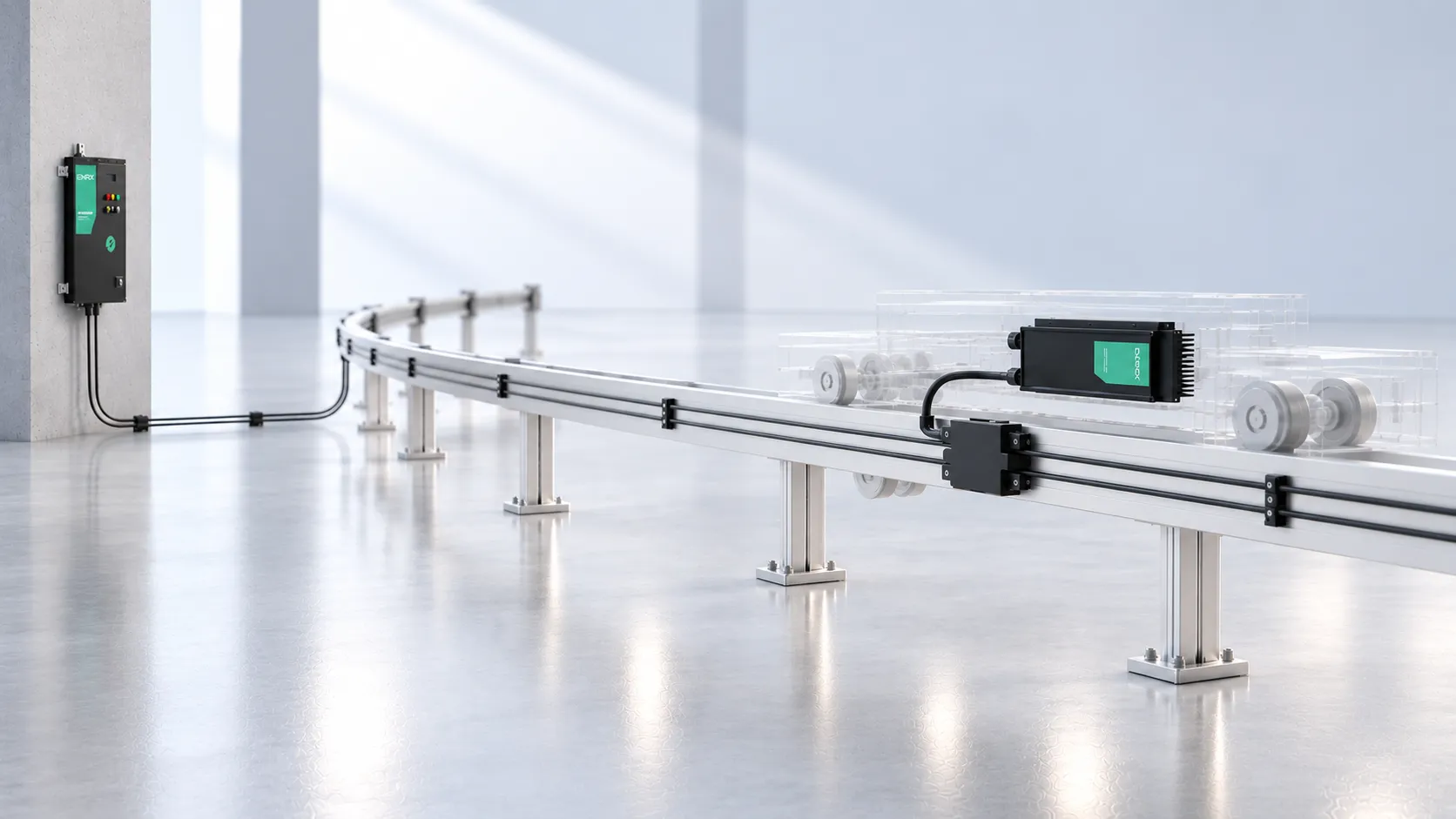
Power transfer built into the transport path
A stationary supply feeds a fixed power path along an overhead rail or guided floor route. A pickup on the moving vehicle receives energy across an air gap and passes it to the onboard electrical system.
The power installation and vehicle are engineered together around route geometry, vehicle demand and the number of carriers that may require power at the same time. This allows energy supply to become part of the transport design from the start.

Turn planned stops into automatic charging
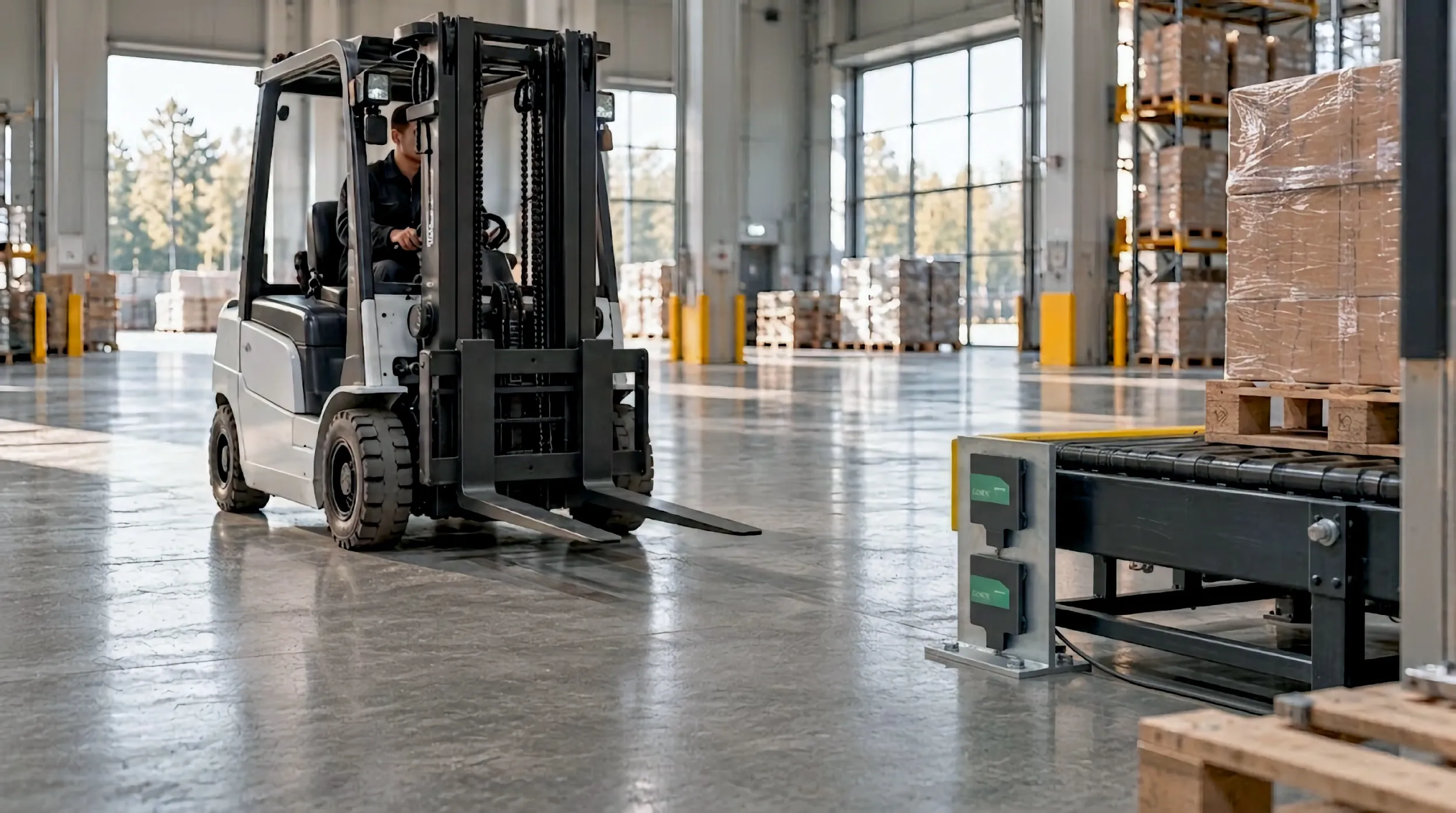
Battery-powered AGVs and AMRs move material between tools, stockers and load ports. ENRMOVE adds wireless charging at selected positions in that workflow, so vehicles can replenish their battery while they are already stopped for a task.
Automatic charging during every stop
When an AGV or AMR reaches a planned charging position, charging can start automatically. There is no cable to connect and no charging task for an operator. Energy is added during time the vehicle is already spending on loading, unloading or waiting.
No exposed charging contacts
Energy transfers across an air gap, without plugs, contact plates or exposed electrical contacts. That means no contact wear, no arcing at the charging interface and no charging contacts to clean or replace. The sealed, contactless design is particularly useful in clean, wet or otherwise demanding environments.
More freedom in vehicle positioning
Wireless charging does not require the vehicle to stop with millimetre-perfect positioning over the pad. ENRMOVE is designed with generous positioning tolerance, making it easier to integrate charging into real vehicle movements and stopping behaviour.
Scale one charging concept across vehicles
ENRMOVE is modular. Different AGVs, AMRs and other battery-powered vehicles can use the same charging concept when equipped with the appropriate receiver. Smaller vehicles may use one pad, while larger or higher-demand vehicles can use multiple pads to increase charging power.

Energy transfer where vehicles already stop
Charging pads are installed at natural stopping points such as load ports, transfer stations or waiting positions. When the vehicle stops, energy is transferred wirelessly across a small air gap to the onboard receiver and battery. The required charging power and stop duration are matched to the vehicle’s operating cycle.
Explore the technology behind the material flow
Guided vehicles on a fixed route can receive power continuously with PWRMOVE, while battery-powered AGVs and AMRs use ENRMOVE to recharge at planned stops.
Both technologies can be used within the same cleanroom, each supporting the type of transport it is best suited for.
At work every day. For decades

Continuous contactless power for 1,100+ AGVs worldwide
AGVs powered
powered routes
installations

Powering Disneyland’s submarines 3 metres underwater
submarines powered
underwater track
technology in use
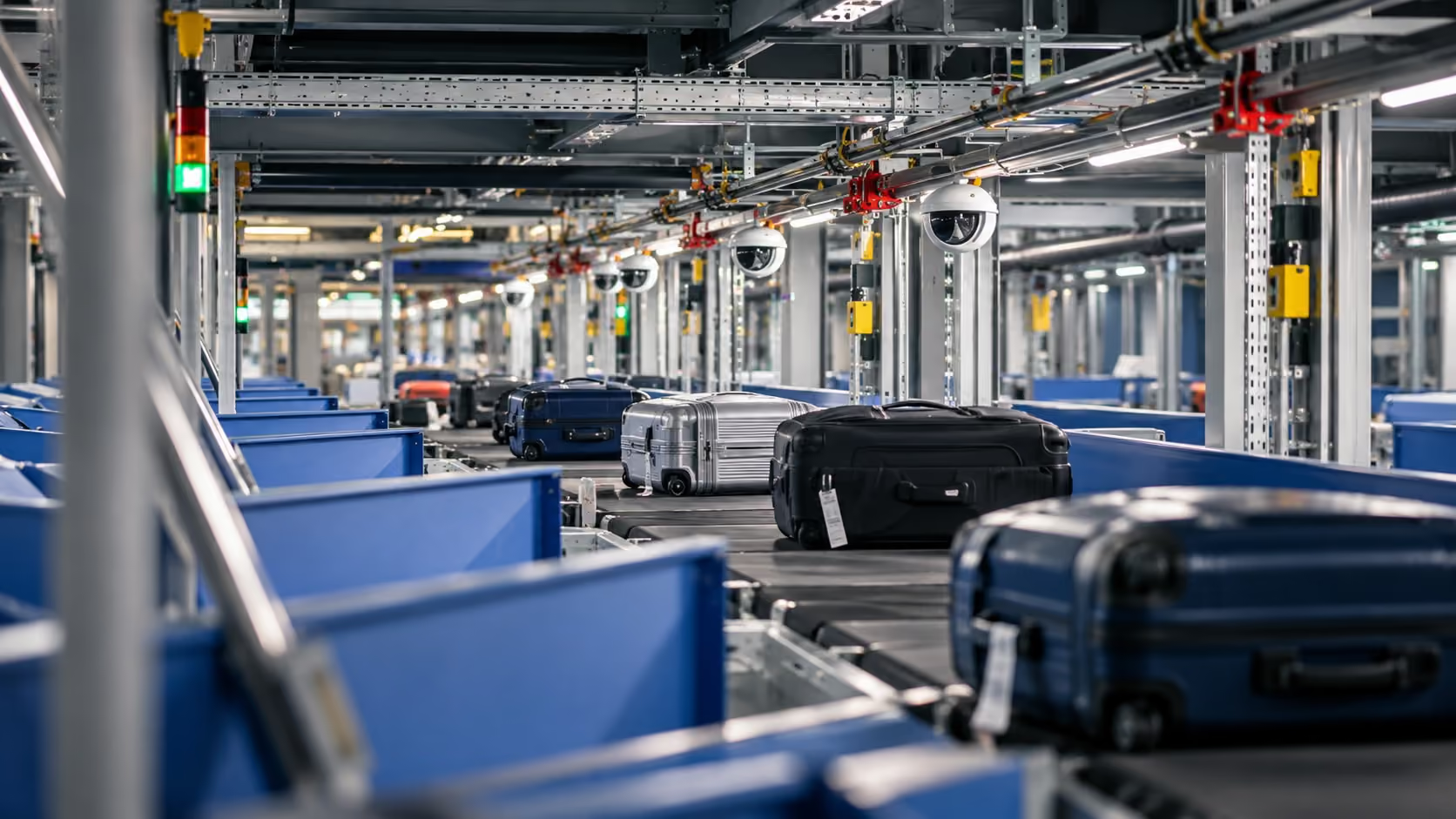
Contactless power for airport baggage sorters
baggage sorting
powered sorter track
sorter carriers

Continuous contactless power for Caterpillar’s AGVs
AGVs powered
powered route
per AGV

88 skillet platforms powered at Hyundai
skillet platforms
per platform
assembly tracks

25+ years of contactless power for parcel sorters
sorter experience
DHL sorter track
powered units

1,000+ EMS carriers powered without contact
EMS carriers
powered track
countries
Get in touch with our product experts
And check if your integration fits and ask for all you need to know.


Evandro Nishimuni

What cleanroom OEMs and operators ask us
Common engineering questions about integrating contactless power into cleanroom transport systems.
Why use contactless power instead of a conductor rail in a cleanroom?
Both can supply moving equipment continuously. PWRMOVE removes the sliding electrical contact, so no collector shoes create wear, arcing, or collector dust along the route. It also removes contact noise and routine cleaning or replacement of those wear parts, while allowing the system to support higher-speed movement without relying on a collector maintaining physical contact.
Can PWRMOVE support high-speed, continuous transport?
Yes. Power transfers across an air gap, so the system does not depend on a collector remaining in physical contact with a conductor as vehicle speed increases.
The power path and pickup are engineered around the route geometry, operating speed, mechanical tolerances and vehicle power demand.
What happens when several carriers require power at the same time?
The system is designed around the combined demand of the vehicles that can be active in a powered section at the same time.
Vehicle density, acceleration, onboard loads and route layout are therefore considered together when sizing the power system.
Can inductive power interfere with sensitive cleanroom equipment?
PWRMOVE systems operate at defined inductive power-transfer frequencies. Existing systems include 20 kHz platforms, while the latest generation operates at 85 kHz.
EMC is considered as part of the complete system design, including the power electronics, track, pickup and surrounding equipment. For semiconductor environments, compatibility with nearby sensitive equipment is assessed as part of the integration.
Can PWRMOVE be integrated into existing overhead transport systems?
Yes. PWRMOVE can be integrated into existing overhead transport architectures, provided the rail geometry, available space, vehicle design and power demand are suitable for the installation.
For new systems, involving ENRX IPT early gives the OEM even more freedom to optimise the power path and pickup as part of the transport design.
Can AGVs and AMRs charge automatically during normal operation?
Yes. ENRMOVE can charge vehicles at positions where they already stop, such as load ports, transfer stations or waiting points.
Charging starts without an operator connecting a cable, so energy replenishment becomes part of the automated material flow rather than a separate charging task.
How accurately does an ENRMOVE vehicle need to stop?
The vehicle does not need millimetre-perfect positioning over the charging pad.
ENRMOVE is designed with positioning tolerance, allowing the charging system to accommodate normal variation in how an AGV or AMR approaches and stops at a charging position.
Can different AGVs and AMRs use the same charging infrastructure?
Yes. Different vehicle types can use the same ENRMOVE charging concept when equipped with the appropriate onboard receiver.
This makes it possible to build a common charging infrastructure for different AGVs and AMRs instead of creating a separate charging solution for every vehicle platform.
Can the charging power be scaled for larger vehicles?
Yes. ENRMOVE is modular. A smaller vehicle may use one charging pad, while larger or higher-demand vehicles can use multiple pads to increase the available charging power. The charging concept can therefore scale with the vehicle and its duty cycle.
What makes contactless power suitable for cleanroom applications?
PWRMOVE and ENRMOVE transfer energy without sliding or exposed electrical contacts. This removes contact wear, collector dust and arcing from the power-transfer interface, while reducing maintenance inside the controlled environment.
Cleanroom qualification of the complete transport system remains with the OEM or system integrator, including the vehicle, materials and mechanical components.