Contactless power that keeps the ride in motion
PWRMOVE supplies continuous contactless power to moving ride vehicles, without collector shoes, exposed contacts or contact wear. Built for speed and demanding environments, it integrates into rail-guided rides, dark rides and water attractions.
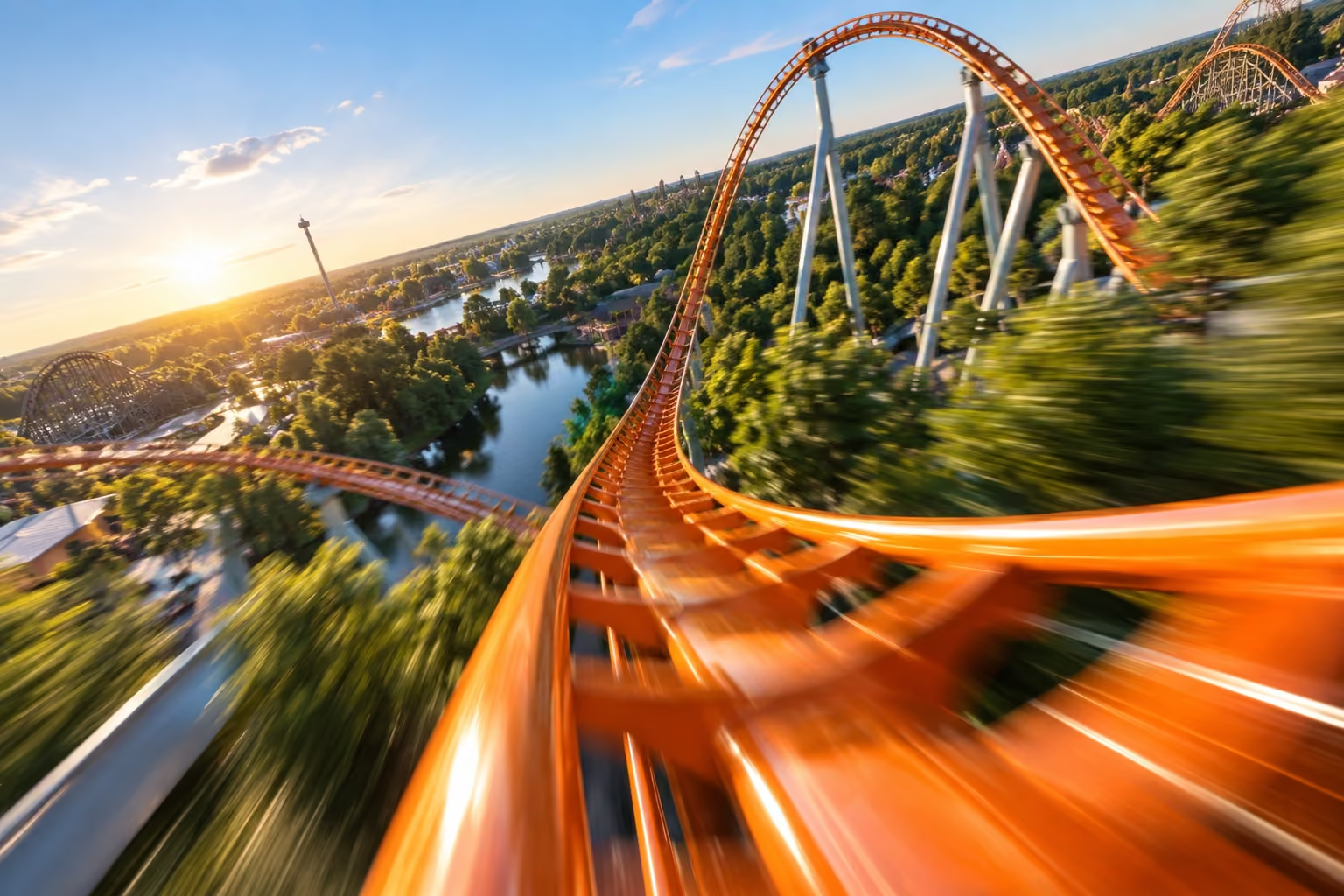
The power system should not define the ride
Ride manufacturers design around movement, guest experience, vehicle geometry and the story an attraction has to tell. The power system has to fit into that design.
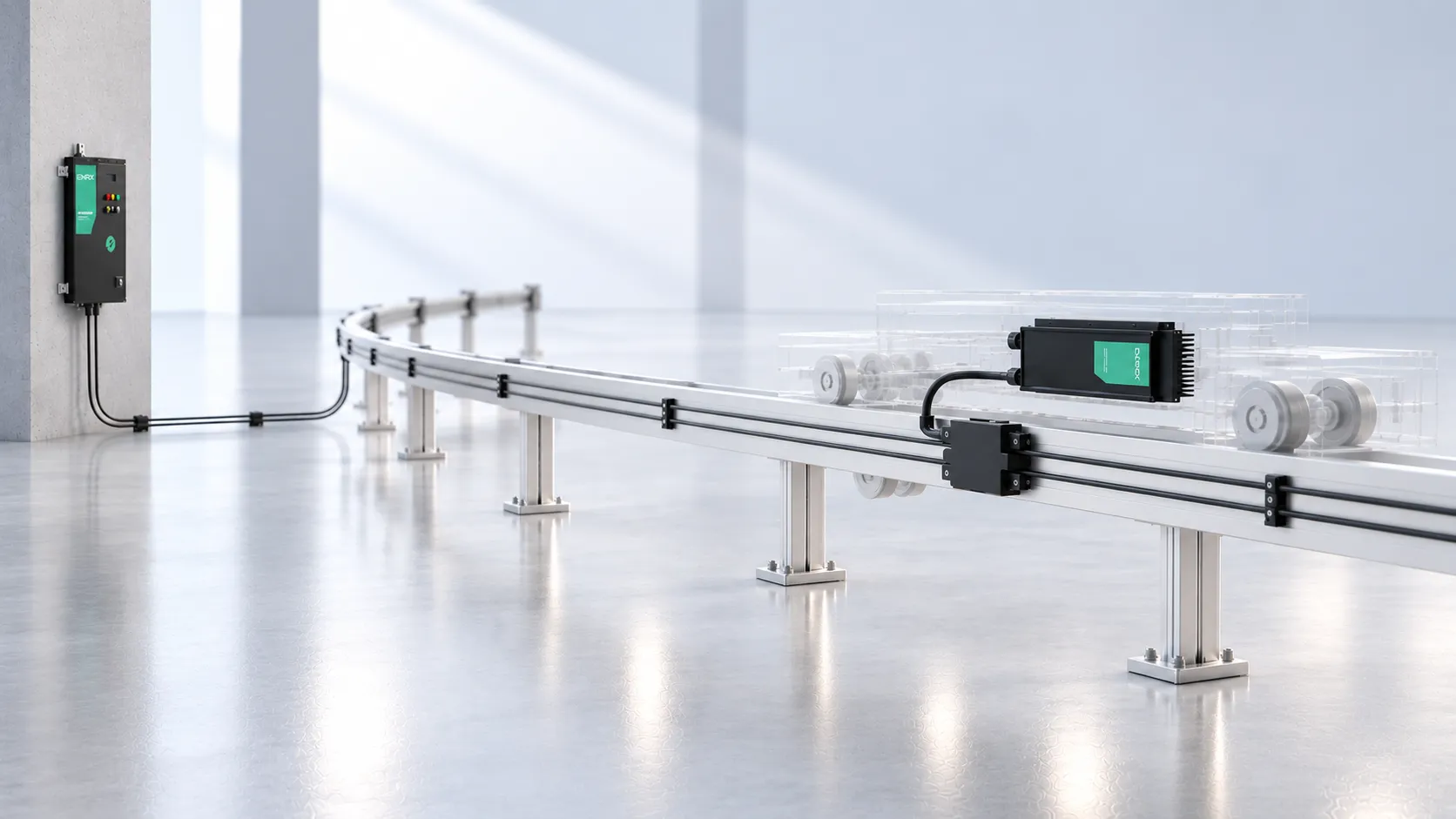
PWRMOVE transfers energy across an air gap, eliminating sliding electrical contacts and creating more freedom for rail-guided rides, floor-running vehicles and demanding environments.

Continuous power through every move
The primary power track follows the ride path while an E-Pickup on the vehicle receives energy across an air gap. Power remains available as the vehicle accelerates, turns and moves through the attraction, without relying on a collector maintaining physical electrical contact with the track.
Built for speed and movement
The contactless interface allows mechanical tolerance between the fixed power track and the moving pickup. This makes the system suitable for higher travel speeds, vibration, repeated movement, and the changing alignment that comes with a moving ride vehicle.
Less wear, almost no maintenance
Without sliding electrical contact, there is no collector wear, contact arcing or collector dust at the power transfer interface. Fewer mechanically wor parts also means fewer components that need regular inspection and replacement.
Quiet where the experience matters
Without sliding brushes or collector shoes, the power transfer itself operates silently. That is particularly valuable in dark rides and immersive attractions, where mechanical contact noise can interfere with audio, effects and the guest experience.
Design freedom in any environment
Contactless power is not dependent on a collector maintaining electrical contact with the track. It gives ride designers more freedom with curves, switches, forward and reverse movement, frequent engagement and demanding environments. It works for outdoor and water rides, as well as fully submerged applications.
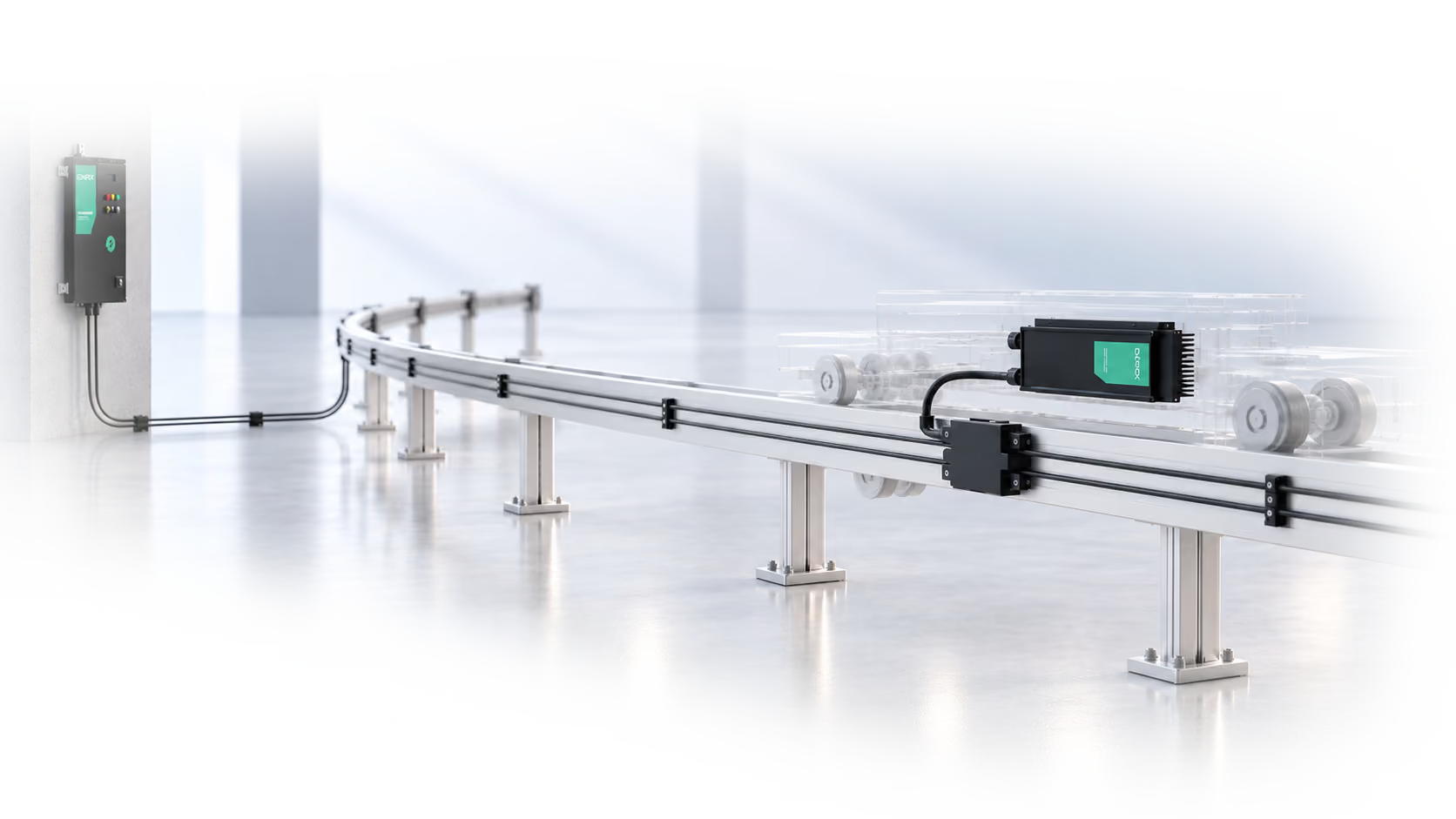
One system from power supply to moving carrier
A stationary power supply feeds two parallel Litz cables installed along the travel path. A moving Pickup receives power across the air gap, while an onboard rectifier converts it for use by the vehicle. The fixed track and moving vehicle are engineered together around travel geometry, movement and power demand.
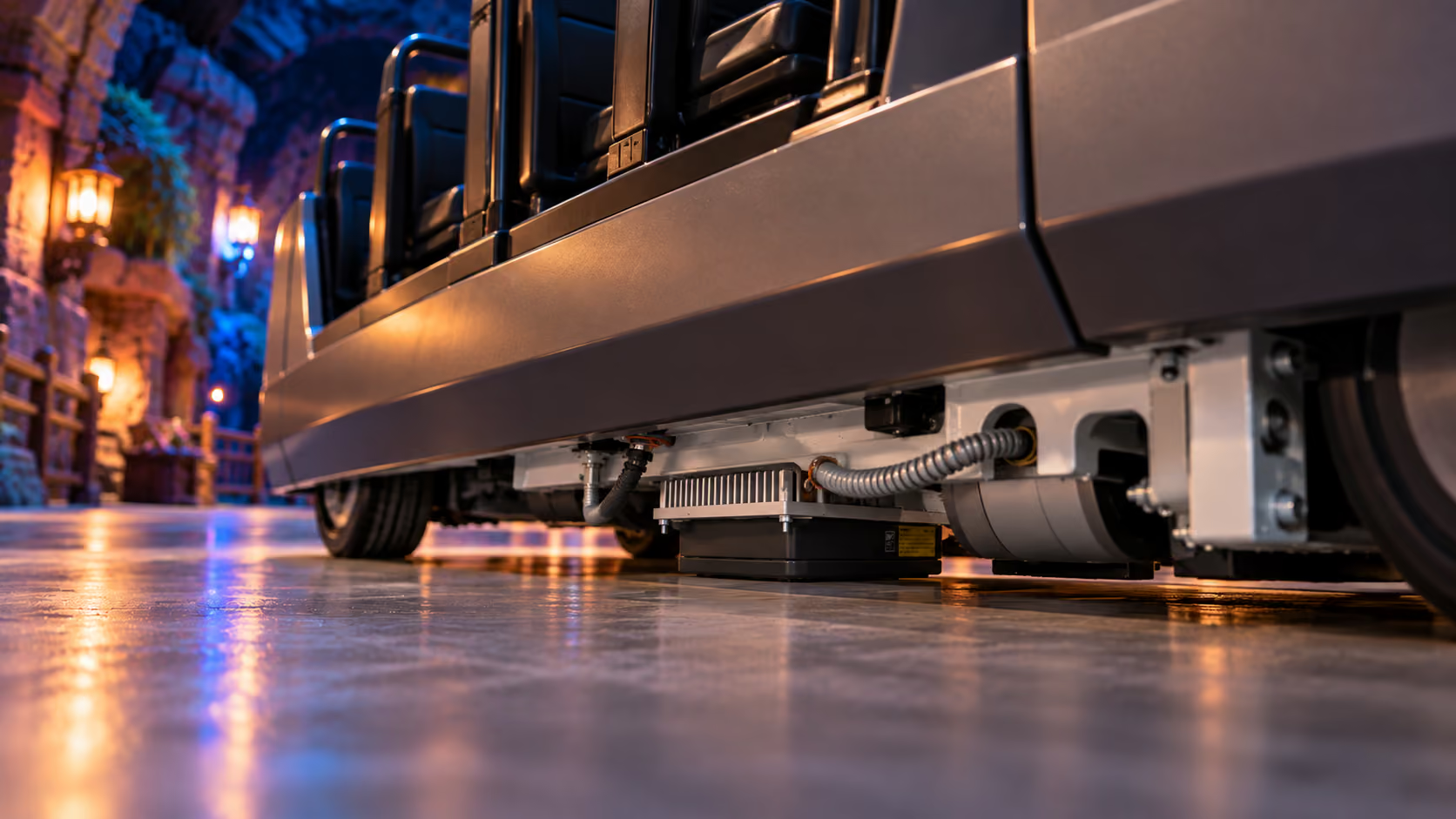
A clear ride surface with power built around it
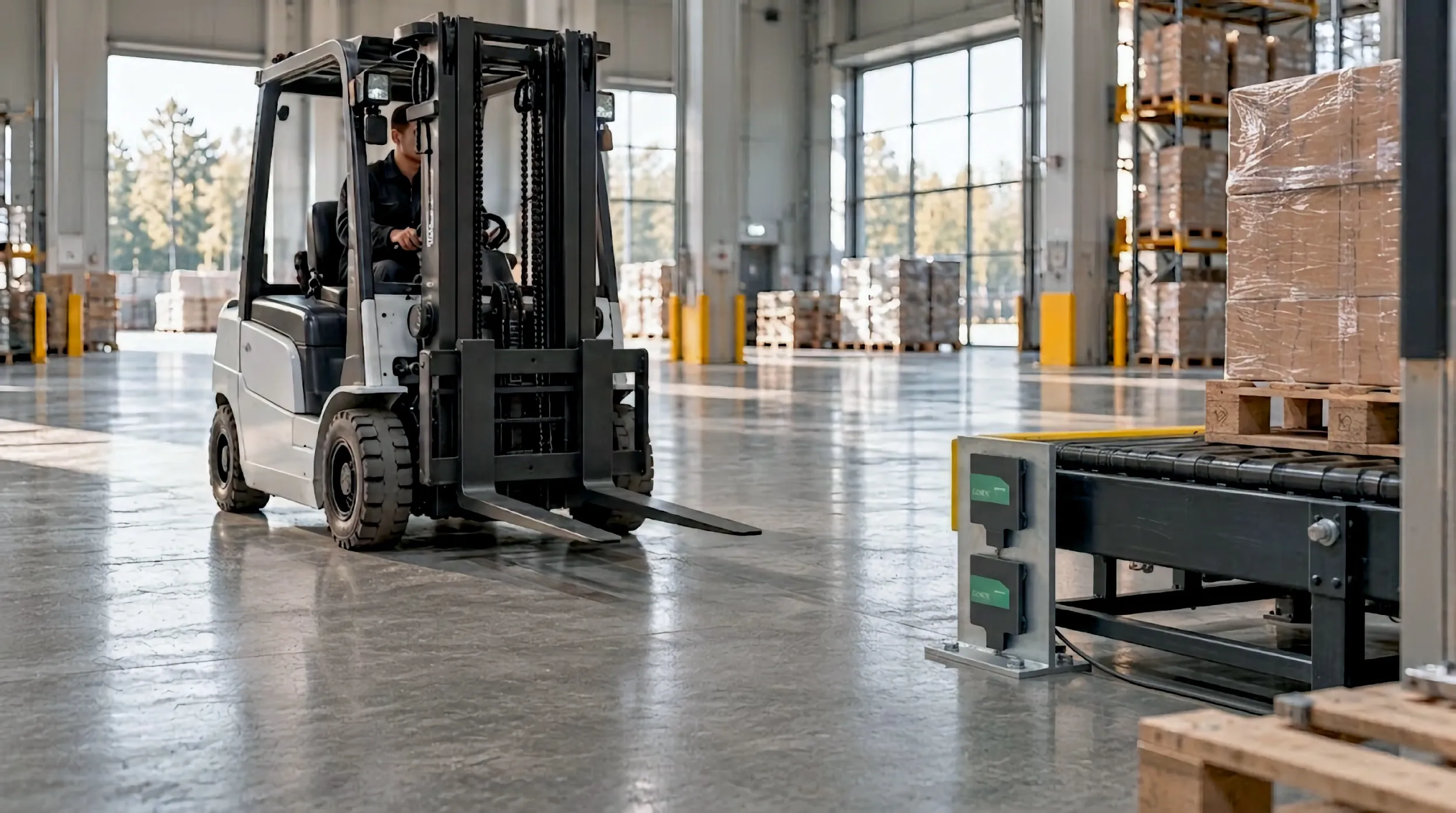
For dark rides and floor running vehicles, the power path can be integrated into the floor or installed in a low profile mat on top of the existing surface. A compact pickup underneath the vehicle receives power across an air gap as the vehicle moves along the route.
This gives ride designers more flexibility in how the powered path is installed and adapted, while avoiding exposed conductor rails and physical charging connections in the ride environment.
More freedom for the ride design
The power path becomes part of the floor, rather than a visible conductor rail or charging station. That keeps the operating area clear and gives OEMs more freedom to design vehicles, scenery and guest-facing spaces around the experience rather than around the power supply.
Continuous power without a physical connection
Dark ride vehicles can need power throughout the complete ride for propulsion, controls, lighting, audio and interactive effects. With contactless power integrated into the floor, that energy remains available while the vehicle moves — without a cable connection or exposed conductor rail.
No onboard traction battery required
Because power can be supplied continuously along the route, the vehicle does not need to carry a traction battery purely to bridge the ride cycle. That can simplify the vehicle, reduce weight and remove charging and battery replacement from normal operation.
Quiet, clean and low maintenance
With no sliding electrical contacts in the power-transfer interface, there are no collector shoes rubbing against a conductor and no exposed contact rail in the ride area. That reduces mechanical wear and contact noise and helps keep the technology in the background, which is particularly valuable in immersive dark rides where the guest should experience the story, not the power system.
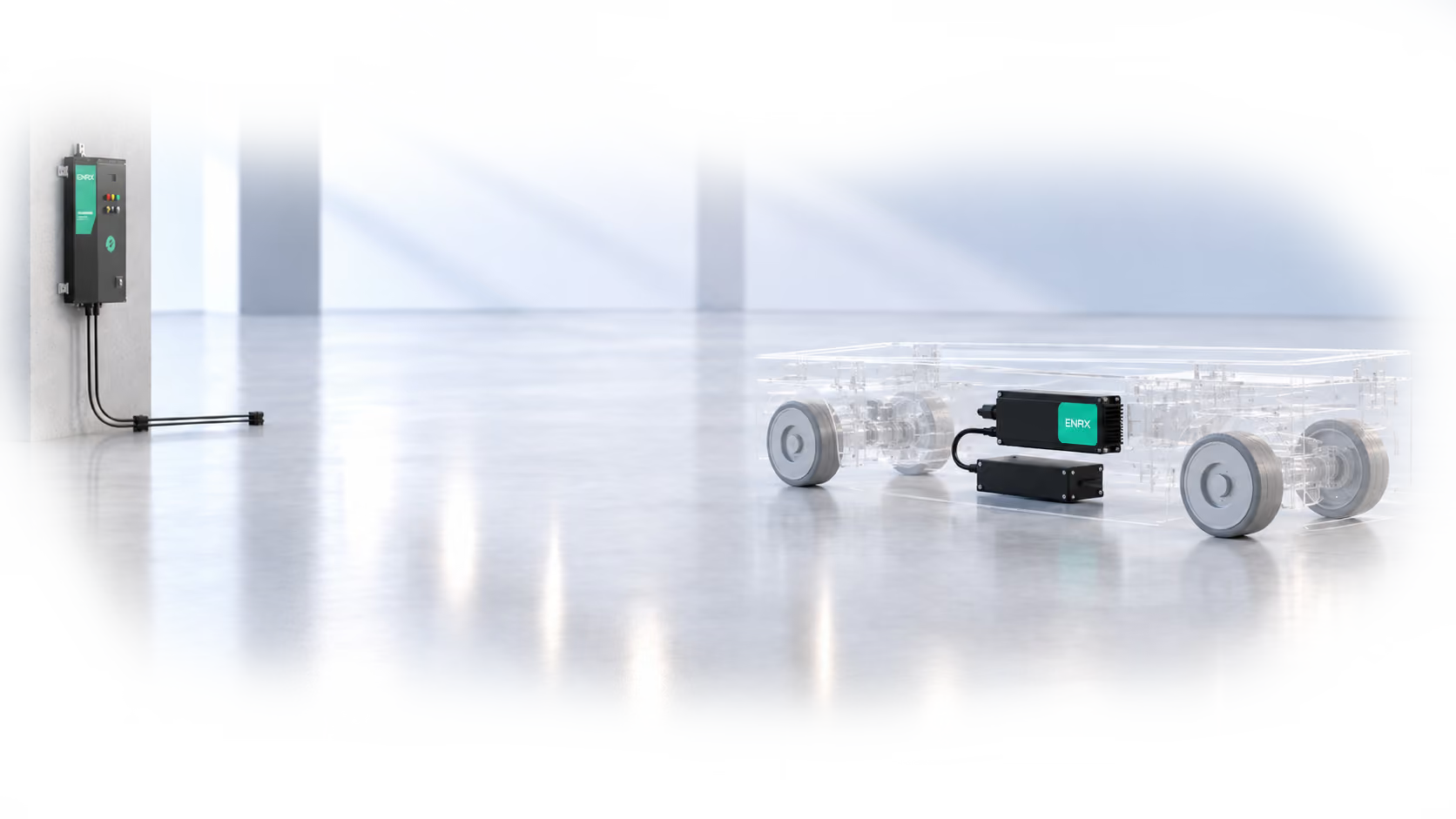
Continuous power along the vehicle route
Two Litz cables create the powered path and can be integrated into the floor or installed in a low-profile surface-mounted track. A flat Pickup underneath the vehicle receives power across the air gap as it moves along the route. This keeps power available continuously without an exposed conductor rail or physical charging connection.
Explore the technology
behind the ride
PWRMOVE delivers continuous contactless power to moving systems.
At work every day. For decades
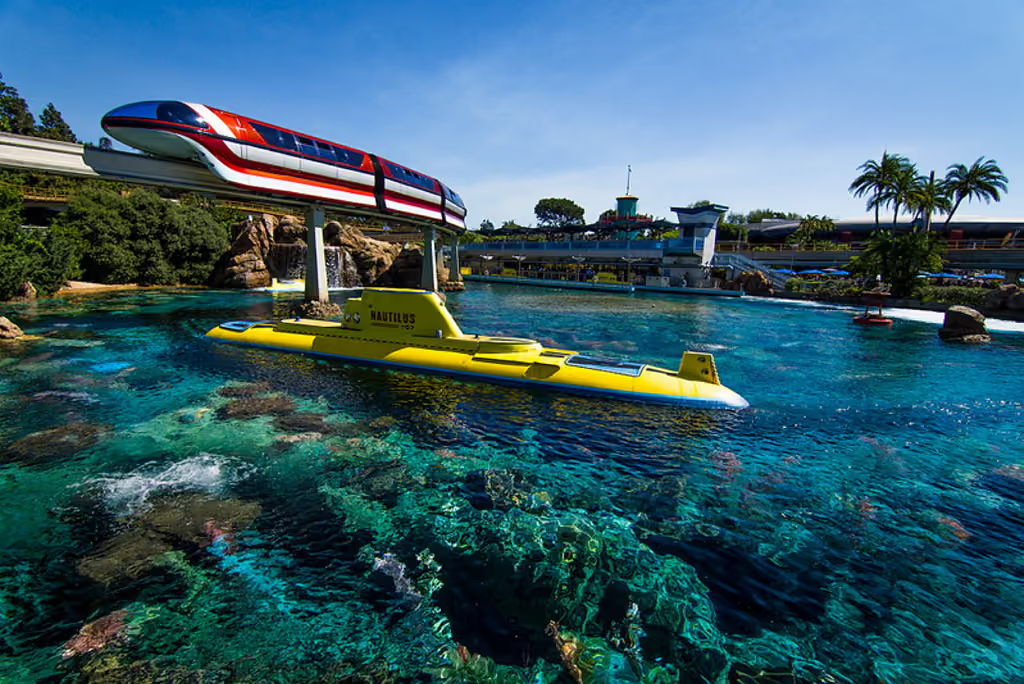
Powering Disneyland’s submarines 3 metres underwater
submarines powered
underwater track
technology in use
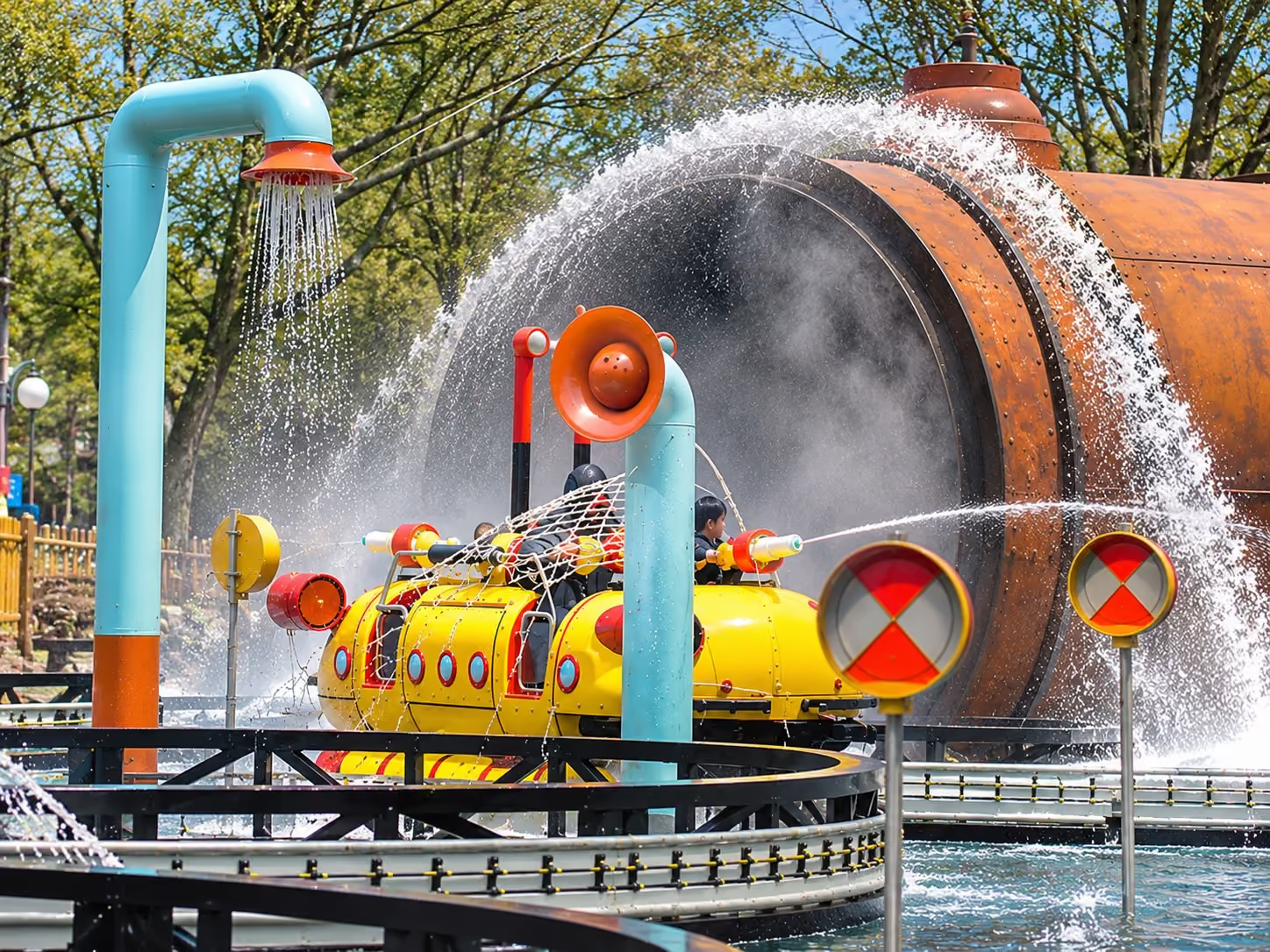
Powering Preston & Barbieri’s Splash Battle rides
Splash Battle ride history
theme park installations
power for moving vehicles

Dockland’s elevators without travelling power cables
inclined elevators
inclined travel
per elevator

65 metres of inductive power at Hermes Tower
powered elevator route
elevator speed
onboard power
Get in touch with our product experts
And check if your integration fits and ask for all you need to know.


Evandro Nishimuni

What ride manufacturers and operators ask us
Can’t find what you’re looking for?
Why use PWRMOVE instead of a conductor rail?
Both can provide continuous electrical power. PWRMOVE removes the sliding electrical contact between the moving vehicle and infrastructure, eliminating collector wear, contact arcing and collector dust from the power transfer interface.
Can PWRMOVE handle vibration, acceleration and higher speeds?
Yes. The pickup receives power across an air gap rather than relying on continuous physical contact with a conductor. The system can therefore be engineered around the mechanical tolerances, vibration and movement of the ride.
Can the power path follow curves and switches?
Yes. Rail guided configurations can support curves, forward and reverse travel, switches and repeated engagement or disengagement without relying on a collector maintaining electrical contact throughout the movement.
Does the vehicle still need batteries?
Not always. Where the vehicle receives continuous power along the route, onboard traction storage can be reduced or eliminated depending on the vehicle architecture.
Can PWRMOVE be retrofitted to existing rides?
Yes. PWRMOVE can be integrated into existing rides as well as new installations. Depending on the available space, ride layout and vehicle design, the power track, Pickup and onboard components can be adapted to fit the existing system. ENRX IPT works with the ride manufacturer or operator to determine the most practical integration approach.
Can PWRMOVE be used around water?
Yes. PWRMOVE transfers power without exposed electrical contacts between the vehicle and infrastructure, making it well-suited to wet environments. At Disney’s Finding Nemo Submarine Voyage, ENRX IPT technology operates in a fully submerged application around 3 metres underwater.
Does the power path always have to be built into the floor?
No. It can be integrated into the running surface for a completely clear floor, or incorporated into a low profile surface mounted solution where the attraction needs more flexibility in the route or installation.
When should ENRX IPT become involved?
Preferably while the vehicle and ride architecture are still being defined. Route geometry, pickup position, available installation space, onboard power demand and operating environment all influence the final system.